


U.S. Precious Metals Industry Coalition Urges Congress to Advance SILVER Act to Address Critical Infrastructure Concentration & National Security Risks
ACCESS Newswire
11 Jun 2026, 19:21 GMT+10
WASHINGTON, D.C. / ACCESS Newswire / June 11, 2026 / A broad coalition representing dozens of key stakeholders across all segments of the U.S. precious metals industry formally called on Congress today to advance the System Integrity through Licensed Vault Expansion & Resilience Act (SILVER Act), bipartisan legislation designed to address national security risks by strengthening the resilience, competitiveness, and geographic diversity of America's precious metals market infrastructure.
The Precious Metals Industry Coalition for Market Security and Access, whose members include U.S.-based depositories, mints, dealers, refiners, miners, logistics providers, banks, insurers, and investors submitted a letter to congressional leaders highlighting what it describes as a significant and underappreciated concentration and security risk within the nation's regulated precious metals delivery and settlement system.
The current structure of exchange-approved precious metals depositories concentrates regulated futures market storage capacity within a small geographic area around New York City, creating vulnerabilities for financial markets, supply chains, and national security.
'Geographic redundancy is a foundational principle of resilient infrastructure and risk management across critical industries and financial systems,' the coalition stated in a letter dated June 11, 2026 signed by more than 40 companies and trade organizations. The current single-region dependency is 'creating dangerous concentration risks, limiting competition and regional participation, and imposing artificial constraints on the marketplace.'
The SILVER Act (SB 4621 and H.R. 8007) is sponsored by Sen. James Risch (R-ID), Sen. Catherine Cortez-Masto (D-NV), Rep. Mark Harris (R-NC), Rep. Russ Fulcher (R-ID), and Rep. Susie Lee (D-NV) and is supported by the Commodities Futures Trading Commission Chairman Michael Selig.
The bipartisan bill would not require approval of any specific depository. Instead, it would establish greater transparency and objective evaluation standards for depository approvals while ensuring that geographic concentration risk and broader public-interest considerations are addressed via the inclusion of several qualified depositories across the U.S.
The coalition argues that precious metals play an increasingly important role not only as financial assets but also as critical inputs for defense, aerospace, electronics, medical technology, and energy production. As a result, disruptions affecting a narrow region around New York City could have severe consequences extending well beyond the precious metals market itself.
'Passage of this simple bipartisan bill would modernize the nation's precious metals infrastructure by promoting regional diversification, reducing costs, strengthening domestic supply chains, enabling new innovative digital products, and expanding market liquidity and access - while better aligning the system with the realities of a national marketplace,' the coalition stated.
____________________________
The coalition's full letter and its signers can be found here, and it reads as follows:
On behalf of our precious metals industry coalition partners consisting of U.S. based depositories, mints, dealers, refineries, miners, logistics providers, banks, insurers, investors, and metals financing businesses, we urge you to address a significant and underappreciated concentration risk within America's precious metals market infrastructure that poses vulnerabilities to national security, financial stability, supply chain resilience, and market continuity.
Currently, there are no depositories approved for the regulated futures markets outside a small sub-region within the Northeastern U.S., and this poses a systemic risk to the market, especially given the critical nature of precious metals and their increasingly vital role within the global financial system and the real-world economy.
Precious metals are not only financial assets; they are also essential inputs for electronics, aerospace, medical technology, energy systems, and defense-related manufacturing.
This concentration problem stems from an outdated practice by the primary derivatives clearing organization that requires gold storage vaults to be located within 150 miles of New York City. Although no internal rule exists for silver, platinum, or palladium, vaults for these metals are, in practice, also not permitted outside the region.
A terrorist attack, natural disaster, cyber incident, infrastructure failure, or other security threat affecting this narrow corridor could severely disrupt metals settlement and delivery functions, undermining financial market stability and harming America's supply chains.
Geographic redundancy is a foundational principle of resilient infrastructure and risk management across critical industries and financial systems. A more geographically distributed depository network would strengthen delivery capacity and settlement continuity during periods of market stress.
But this problem extends beyond risk exposure. The lack of geographic diversity also undermines market liquidity, competition, and access. It also undermines the ability to build precious metals supply chain infrastructure in other regions of the country.
Greater regional participation would support investment, infrastructure development, and skilled employment opportunities in states that already play a major role in domestic precious metals production and processing.
Many market participants across America are disadvantaged because nearby high-quality commercial depositories - already operating successfully under rigorous commercial and security standards - have been unable to participate in the public markets and therefore cannot offer ultimate liquidity. This is especially true in the Western U.S. where a significant amount of gold and silver mining, minting, manufacturing, processing, and trading takes place.
There is also demand from investors, businesses, and financial institutions for greater financial infrastructure outside the New York region and broader geographic choice.
Many prefer to store their metals closer to where they live or do business. Rather than removing their metal from Exchange warehouses altogether, these holders should be allowed access to new options, thereby increasing overall market liquidity.
Expanding Exchange participation to include qualified facilities across the nation would increase competition, improve efficiency, and broaden market access. For example, commercial storage costs in other regions are materially lower than the maximum fees currently permitted - and commonly charged - by Exchange-approved depositories. Transportation costs can also be reduced which creates savings for all market participants, including end commercial users, consumers, and investors.
Under Title VIII of Dodd-Frank, the Financial Stability Oversight Council (FSOC) designates certain derivatives clearing organizations (DCOs) as 'systemically important financial market utilities,' and they benefit from an implicit government backstop. This creates a heightened expectation that they maintain robust risk-management practices that promote financial stability and operational resilience and reduce concentration risk. That's because their failure or disruption could create severe liquidity or credit risks, thereby threatening the stability of the U.S. financial system.
At present, the primary DCO for the commodities futures market has been unwilling to consider adding qualified depositories in any other region, creating dangerous concentration risks, limiting competition and regional participation, and imposing artificial constraints on the marketplace. This not only harms investors, service providers, producers, and other market participants but also undermines the market as a whole.
The System Integrity through Licensed Vault Expansion & Resilience Act (SILVER Act) - SB 4621 and H.R. 8007 - offers a clear path forward.
The SILVER Act does not mandate approval of any specific depository. Rather, it promotes transparency, objective evaluation criteria, and due consideration of geographic concentration risk in depository approval decisions. It ensures appropriate consideration of the public interest in reducing systemic risk to the financial system and avoiding restraints on trade.
Passage of this simple bipartisan bill would modernize the nation's precious metals infrastructure by promoting regional diversification, reducing costs, strengthening domestic supply chains, enabling new innovative digital products, and expanding market liquidity and access -while better aligning the system with the realities of a national marketplace.
We respectfully urge the Committee to advance the SILVER Act and support a more resilient, competitive, and geographically diversified precious metals market infrastructure.
About the Coalition
The Precious Metals Industry Coalition for Market Security & Access represents a broad cross-section of the U.S. precious metals industry, including depositories, mints, dealers, refiners, miners, logistics providers, banks, insurers, investors, and metals financing businesses committed to strengthening the security, resilience, competitiveness, and accessibility of America's precious metals markets.
Media Contact:
[email protected]
SOURCE: Precious Metals Industry Coalition for Market Security & Access
View the original press release on ACCESS Newswire
 Share
Share
 Tweet
Tweet
 Share
Share
 Flip
Flip
 Email
Email
Subscribe and Follow
Get a daily dose of Vancouver Star news through our daily email, its complimentary and keeps you fully up to date with world and business news as well.


News RELEASES
Publish news of your business, community or sports group, personnel appointments, major event and more by submitting a news release to Vancouver Star.
More InformationNetanyahu to run again, party confirms after Trump doubts claim

TEL AVIV, Israel: Benjamin Netanyahu will run for re-election this year, his party said on June 10, after U.S. President Donald Trump...
Bear trapped on university campus from city near Tokyo

TOKYO, Japan: A bear that wandered into Utsunomiya, a city just north of Tokyo, and frightened residents was captured on June 9 after...
After retaliatory strikes, Trump warns Iran will ‘pay the price’

DUBAI, U.A.E.: Even as the United States carried out airstrikes on Iran early on June 10, and Iran responded by attacking countries...
8 killed in historic Lebanese city of Tyre in Israeli airstrike

DUBAI/BEIRUT: Israel carried out an airstrike on the historic port city of Tyre in southern Lebanon on June 9, killing at least eight...
Kenyan protestors teargassed at US Ebola quarantine facility

NANYUKI, Kenya: On June 9, Kenyan police used tear gas to break up protesters in the central town of Nanyuki. The protesters were opposing...
US court strikes down Trump-era H-1B visa surcharge
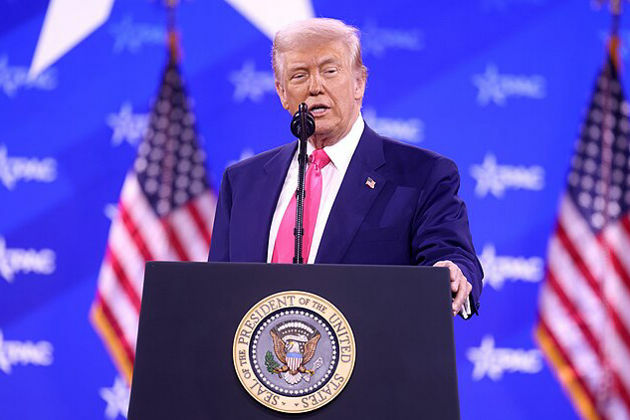
BOSTON, Massachusetts: A federal judge has invalidated a $100,000 fee imposed by President Donald Trump on new H-1B visas, ruling that...
Existing home sales jump as buyers return to housing market

WASHINGTON, D.C.: Sales of previously owned homes in the United States rose to their strongest pace of the year in May, signaling renewed...
Iran war, latest CPI, undermine Wall Street, Nasdaq loses nearly 2%

NEW YORK, New York - U.S. stocks tumbled on Wednesday as the latest CPI reading showed inflation in the United States has surged to...
OpenAI joins Anthropic in move toward blockbuster IPO

SAN FRANCISCO, California: OpenAI has confidentially filed for a U.S. initial public offering, becoming the latest artificial intelligence...
Meta told to give competing AI chatbots WhatsApp access

BRUSSELS, Belgium: European Union regulators have ordered Meta Platforms to restore access to WhatsApp for competing artificial intelligence...
Amazon backs US fiber optics expansion with Corning pact
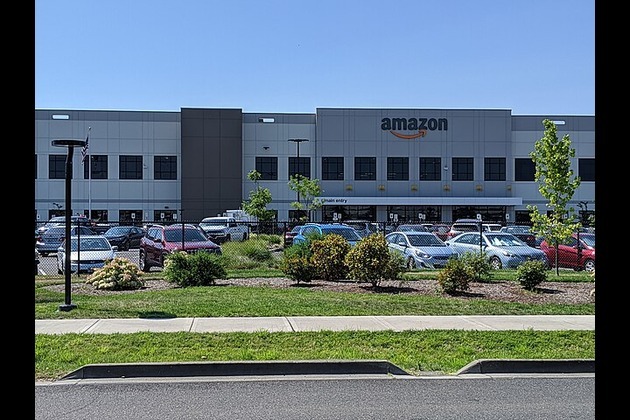
SEATTLE, Washington: Amazon has signed a multi-billion-dollar agreement with Corning aimed at expanding U.S. production of optical...
Dow Jones gains 86 points despite techs slide
NEW YORK, New York - Global stock markets closed with sharp divergences Tuesday, as U.S. indexes delivered a mixed performance while...
